Blog

  • Top 10 Different Alphabet Pattern Programs in Java

    Top 10 Different Alphabet Pattern Programs in Java

    This post focuses on the various Java pattern program specifically Top 10 Different Alphabet Pattern Programs in Java. Patterns are one of the easiest ways to improve the coding skills for java. The frequent use loops can increase your skills and printing pattern in order. This article covers various Alphabet patterns. Other are:

    Let’s begin:

    Alphabet/Character Patterns in Java

    Pattern programs in java: Pattern 1

     A
     B B
     C C C
     D D D D
     E E E E E
     F F F F F F
     G G G G G G G
     H H H H H H H H

    Let us understand the code:

     //Pattern with alphabets
    
     public class Pattern1  
     {  
        public static void main(String[] args)  
        {  
            int count = 7;  
            for(int i = 0 ; i <= count  ; i++)  
            {  
             for(int j = 0 ; j <= i ; j++)  
             {  
              System.out.print(" "+(char)(65 + i));  
             }  
              System.out.println("");  
            }  
        }  
     }

    Pattern programs in java: Pattern 2

    Enter the number of rows: 5
    A
    A B
    A B C
    A B C D
    A B C D E
    import java.util.Scanner;
    public class Pattern2
    {
        public static void main(String[] args)
        {
            Scanner sc = new Scanner(System.in);
            
            System.out.print("Enter the number of rows: ");
            int rows = sc.nextInt();
           
           // ASCII value of alphabet 'A'
            int alph = 65; 
            
            for (int i=0; i< rows; i++)
            {
                for (int j=0; j<=i; j++)
                {
                  System.out.print((char) (alph+j) + " ");
                }
                System.out.println();
            }
             
            sc.close();
        }
    }

    Pattern programs in java: Pattern 3

    Enter the number of rows: 5
    A B C D E F 
    A B C D E 
    A B C D 
    A B C 
    A B 
    A 
    A 
    A B 
    A B C 
    A B C D 
    A B C D E 
    A B C D E F
    import java.util.Scanner;
    public class Pattern3
    {
        public static void main(String[] args)
        {
            Scanner sc = new Scanner(System.in);
            
            System.out.print("Enter the number of rows: ");
            int rows = sc.nextInt();
           
           for (int i = 5; i >= 0; i--)
           {
            // ASCII value of alphabet 'A'
            int alph = 65;
            
            for (int j = 0; j <= i; j++)
                System.out.print((char) (alph + j) + " ");
            
            System.out.println();
           }
        
          for (int i = 0; i<= 5; i++)
          {
           int alph = 65;
           for (int j = 0; j <= i; j++)
              System.out.print((char) (alph + j) + " ");
       
           System.out.println();
          }
             
        sc.close();
      }
    }

    Pattern programs in java: Pattern 4

    Enter the number of rows: 5
    E
    E D
    E D C
    E D C B
    E D C B A
    import java.util.Scanner;
    public class Pattern4
    {
        public static void main(String[] args)
        {
            Scanner sc = new Scanner(System.in);
            
            System.out.print("Enter the number of rows: ");
            int rows = sc.nextInt();
           
           // ASCII value of alphabet 'A'
           int alphabet = 65; 
            
            for (int i=rows-1; i>=0 ; i--)
            {
              for (int j=rows-1; j>=i; j--)
              {
                System.out.print((char) (alphabet+j) + " ");
              }
             System.out.println();
            }
             
        sc.close();
      }
    }

    Pattern programs in java: Pattern 5

    Full pyramid character pattern in Java.

    Enter the number of rows: 5
          A
         A B
        A B C
       A B C D
      A B C D E
    import java.util.Scanner;
    public class Pattern5
    {
        public static void main(String[] args)
        {
            Scanner sc = new Scanner(System.in);
            
            System.out.print("Enter the number of rows: ");
            int rows = sc.nextInt();
           
           // ASCII value of alphabet 'A'
           int alphabet = 65; 
            
           for (int i= 0; i<= rows-1 ; i++)
            {
                for (int j=rows-1; j>i; j--)
                {
                     System.out.print(" ");
                }
                for (int k=0; k<=i; k++)
                {
                     System.out.print((char) (alphabet+k) + " ");
                }
                System.out.println();
            }
             
        sc.close();
      }
    }

    Pattern programs in java: Pattern 6

    Inverted pyramid pattern of alphabets in java.

    Enter the number of rows: 5
       A B C D E
        A B C D
         A B C
          A B
           A
    import java.util.Scanner;
    
    public class Pattern6
    {
        public static void main(String[] args)
        {
            Scanner sc = new Scanner(System.in);
            
            System.out.print("Enter the number of rows: ");
            int rows = sc.nextInt();
           
           // ASCII value of alphabet 'A'
           int alphabet = 65; 
            
           for (int i= 0; i<= rows-1 ; i++)
            {
                for (int j=0; j<=i; j++)
                {
                    System.out.print(" ");
                }
                for (int k=0; k<=rows-1-i; k++)
                {
                  System.out.print((char) (alphabet + k) + " ");
                }
                System.out.println();
            }
             
        sc.close();
      }
    }

    Pattern programs in java: Pattern 7

    Enter the number of rows: 6
    A B C D E F 
     B C D E F 
      C D E F 
       D E F 
        E F 
         F 
         F 
        E F 
       D E F 
      C D E F 
     B C D E F 
    A B C D E F 
    import java.util.Scanner;
    
    public class Pattern7
    {
        public static void main(String[] args)
        {
            Scanner sc = new Scanner(System.in);
            
            System.out.print("Enter the number of rows: ");
            int rows = sc.nextInt();
           
           // ASCII value of alphabet 'A'
           int alphabet = 65; 
            
           for (int i= 0; i<= rows-1 ; i++)
           {
            for (int j=0; j<i; j++)
            {
              System.out.print(" ");
            }
            for (int k=i; k<=rows-1; k++)
            {
              System.out.print((char) (alphabet + k) + " ");
            }
            System.out.println("");
           }
            
            for (int i= rows-1; i>= 0; i--)
            {
             for (int j=0; j<i; j++)
             {
               System.out.print(" ");
             }
             for (int k=i; k<=rows-1; k++)
             {
               System.out.print((char) (alphabet + k) + " ");
             }
            System.out.println("");
            }
             
        sc.close();
      }
    }

    Pattern programs in java: Pattern 8

    Enter the number of rows: 5
    A  
    A B  
    A B C 
    A B C D  
    A B C D E 
    A B C D 
    A B C 
    A B  
    A  
    import java.util.Scanner;
    public class Pattern8
    {
        public static void main(String[] args)
        {
            Scanner sc = new Scanner(System.in);
            
            System.out.print("Enter the number of rows: ");
            int rows = sc.nextInt();
           
           // ASCII value of alphabet 'A'
           int alphabet = 65; 
            
           for (int i= 0; i<= rows-1 ; i++)
            {
             for (int j=0; j<=i; j++)
             {
                System.out.print((char) (alphabet + j)+ " ");
             }
            System.out.println("");
            }
            for (int i=rows-1; i>=0; i--)
            {
             for(int j=0; j <= i-1;j++)
             {
                System.out.print((char) (alphabet + j)+ " ");
             }
            System.out.println("");
            }
             
        sc.close();
      }
    }

    Pattern programs in java: Pattern 9

    Enter the number of rows: 5
         A
        BB
       CCC
      DDDD
     EEEEE
    FFFFFF
    import java.util.Scanner;
    public class Pattern9
    {
        public static void main(String[] args)
        {
            Scanner sc = new Scanner(System.in);
            
            System.out.print("Enter the number of rows: ");
            int rows = sc.nextInt();
           
           // ASCII value of alphabet 'A'
           int alphabet = 65; 
            
           for (int i= 0; i<= rows; i++)
            {
             for (int j=1; j<=rows-i; j++)
             {
                System.out.print(" ");
             }
             
             for (int k=0;k<=i;k++)
             {
                System.out.print((char) (i+alphabet));
             }  
                System.out.println("");
            }
             
        sc.close();
      }
    }

    Pattern programs in java: Pattern 10

    import java.util.Scanner;
    public class Pattern10
    {
        public static void main(String[] args)
        {
            Scanner sc = new Scanner(System.in);
            
            System.out.print("Enter the number of rows: ");
            int rows = sc.nextInt();
           
           // ASCII value of alphabet 'A'
           int alphabet = 65; 
            
           for (int i= 1; i<= rows ; i++)
            {
             int count = rows -1;
             int temp = i;
             
             for (int j=1; j<=i; j++)
             {
                System.out.printf("%4c", (char)temp + alphabet-1);
                temp = temp + count;
                count--;
             }
            System.out.println("");
            }
             
        sc.close();
      }
    }
  • Java Program to Reverse a String

    In this tutorial, we will write a program to reverse a string in Java. It means displaying the string from backward.

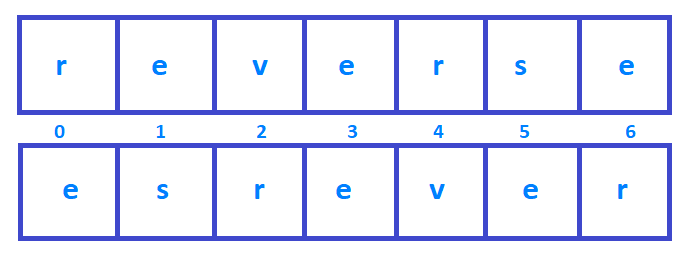
    Consider the string reverse, we write a java program in various ways to reverse it and it will be displayed as esrever. Some of the ways to do it are using:

    • for loop
    • recursion
    • StringBuffer.

    Write a java program to reverse a string:

    Using for loop

     //reverse a string 
    
     import java.util.Scanner;
    
     class ReversingString
     {
        public static void main(String args[])
        {
           String str, revString= "";
           Scanner in = new Scanner(System.in);
          
          //user input
           System.out.println("Enter a string: ");
           str= in.nextLine();
          
           int length = str.length();
          
           for (int i = length - 1 ; i >= 0 ; i--)
           {
            revString += str.charAt(i);
           }
            
           //display the reverse result
           System.out.println("Reverse of the entered string: " + revString);
        }
     }

    Output: when the code is is executed it shows the following result.

    Enter a string:
    I am learning java
    Reverse of the entered string: avaj gninrael ma I


    Using StringBuffer:

    In this method, we use reverse() method of StringBuffer class to reverse a string in java.

    //reverse a string Using StringBuffer
    
    import java.util.Scanner;
    
    class ReverseOfString
    {
      public static void main(String args[])
      {
        String str;
        Scanner in = new Scanner(System.in);
          
        //user input
        System.out.println("Enter the string: ");
        str= in.nextLine();
          
        //using StringBuffer
        StringBuffer sb = new StringBuffer(str);
        System.out.println("Reverse of entered string is:"+sb.reverse());
    
      }
    }

    Output:

    Enter the string:
    reverse
    Reverse of entered string is: esrever


    Using Recursion:

     //reverse a string using recursion 
    
     import java.util.Scanner;
    
     class Main
     {
      public static void main(String args[])
      {
        Main rvrs = new Main();
        
        String str, revString= "";
        Scanner in = new Scanner(System.in);
        //user input
        System.out.println("Enter a string: ");
        str= in.nextLine();
          
       String reverse = rvrs.reverseString(str);
       System.out.println("Reverse of entered string is: "+reverse);
    
      }
      
      public String reverseString(String str)
      {
      if ((null == str) || (str.length() <= 1))
         {
           return str;
         }
    
         return reverseString(str.substring(1)) + str.charAt(0);
      }
     }

    Output:

    Enter the string:
    reverse
    Reverse of entered string is: esrever


  • Java Program to Check for Leap Year

    The following Program to Check if the Entered year is a leap year or not, the if-else statement has been used. If you want to learn about the if-else statement in Java, click the link below.

    A leap year comes after every 4 years and has 366 days that year instead of 365 days. In the leap year, an additional day is added to the February month has 29 days instead of 28 days.

    Now let us understand through mathematical logic,

    • If a year is divisible by 4 then it is leap year.
    • If a year is divisible by 400 and not divisible by 100 then it is also a leap year.
    • Example: 2000, 2004, 2008, etc are the leap years.

    Java Program to Check for Leap Year

     //check for leap year in java
    
     import java.util.*;
    
     public class LeapYearJava
     {
       public static void main(String[] args)
       {
         int n;
         int year;
         Scanner sc = new Scanner(System.in);
    
         System.out.println("Enter the year");
         n = sc.nextInt();
    
         year = n;
         boolean leap = false;
    
         if (year % 4 == 0)
         {
           if (year % 100 == 0)
           {
             // year is divisible by 400, hence the year is a leap year
             if (year % 400 == 0)
               leap = true;
             else
               leap = false;
           }
           else
             leap = true;
         }
         else
           leap = false;
    
         //Display
         if (leap)
           System.out.println(year + " is a leap year.");
         else
           System.out.println(year + " is not a leap year.");
       }
     }

    Output:

    Enter the year
    2016
    2016 is a leap year.


  • Java Program to Check Armstrong Number

    In this tutorial, we will write a Java Program to check Armstrong number. We will write two different programs to check the armstrong number in java.

    1. What is an Armstrong number?
    2. Java program to check the Armstrong Number(for any digit number) using a while and for.
    3. Java program to check the Armstrong Number(using Math.pow() method).


    What is an Armstrong Number?

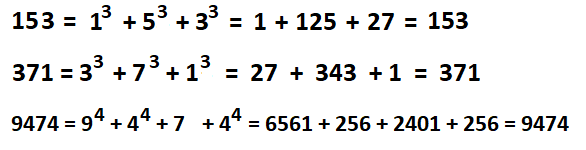
    A number is said to be an Armstrong Number if even after the sum of its digits, where each digit is raised to the power of the number of digits is equal to the original number. For example 153, 371, 407, 9474, etc are Armstrong Numbers.

    Follow the below calculation.

    Armstrong Number in Java

    Java program to check the Armstrong Number using while and for loops

    import java.util.Scanner;
     
     public class ArmstrongNumber
     {
      public static void main(String[] args)
      {
        int n, num, totalDigits, remainder, result = 0;
     
        System.out.println("Enter the Number:");
        Scanner scanner = new Scanner(System.in);
        
        n = scanner.nextInt();
        scanner.close();
        
        //setting the power to the no. of digits
        totalDigits = String.valueOf(n).length();
        
        num = n;
     
        while (num != 0)
        {
            remainder = num % 10;
            int lastDigits = 1;
            
            for(int i = 0; i < totalDigits; i++)
             {
               lastDigits = lastDigits * remainder;
             }
             
            result = result + lastDigits;
            num /= 10;
        }
     
        if(result == n)
            System.out.println(n + " is an Armstrong number.");
        else
            System.out.println(n + " is not an Armstrong number.");
      }
     }

    Output: You can check for any digit Number.

    Enter the Number:
    9474
    9474 is an Armstrong number.

    Explanation:
    First we create required variables(n, num, totalDigits, remainder, result). Get User Input and store it in n, then we need the number of digits present in that number and store it n totalDigits using code (totalDigits = String.valueOf(n).length();). After that, copy the entered number to num.

    Now start the while loop checking num is not equal to zero. While stops as soon as num becomes zero.
    After each iteration of the while loop, the last digit of num is stored in remainder for the second use. We initiate an int variable lastDigits = 1.

    Now the for loop runs until the totalDigits less than i where is initiated as 0 and increase by 1 after each iteration. Inside for loop lastDigits is multiplied to remainder and the result is added to lastDigits.

    After the end of for loop, the value of lastDigits is assigned to the result variable.
    and at the end, we divide the num by 10 i.e num /= 10; which will remove the last digit from the number.
    This step is continued until the num becomes 0.

    At last, we will check with if-else statement whether the result is equal to the original number or not. If it is found equal,l then the entered number is an Armstrong Number.


    Java program to check the Armstrong Number using Math.pow() method

     //check for armstrong number
      
    import java.util.Scanner;
     
     public class ArmstrongNumber
     {
      public static void main(String[] args)
      {
        int n, num, power, remainder, result = 0;
     
        
        System.out.print("Enter the Number: ");
        Scanner scanner = new Scanner(System.in);
        
        n = scanner.nextInt();
        scanner.close();
        
        //seting the power to the no. of digits
        power = String.valueOf(n).length();
        
        num = n;
     
        while (num != 0)
        {
            remainder = num % 10;
            result += Math.pow(remainder, power);
            num /= 10;
        }
     
        if(result == n)
            System.out.println(n + " is an Armstrong number.");
        else
            System.out.println(n + " is not an Armstrong number.");
      }
     }

    Output: You can check for any digit Number.

    Enter the Number: 370
    370 is an Armstrong number

    Explanation: In the above program we use the inbuilt method (Math.pow()) which makes it easy for us to calculate the raised power to the number.

    The process is the same as explained above, only the difference is instead of for loop we use the method(Math.pow()) as result += Math.pow(remainder, power);.

    If we were to calculate for the only three-digit number then we can simply replace the code:
    result += Math.pow(remainder, power); with
    result = result + remainder*remainder*remainder;


  • Java Program to Generate Fibonacci Series

    In this java program tutorial, we will write a java program to display the Fibonacci series. Let us first understand what is Fibonacci series is and then the Java program to generate them.

    What is Fibonacci Series?

    Fibonacci series is the series of numbers where the next number is achieved by the addition of the previous two numbers. The initial addition of two numbers is 0 and 1.

    For example: 0,1,1,2,3,5,8,13….etc.

    We will see two ways to print the Fibonacci Series.

    • With the help of iteration(for-loop).
    • Using recursion.

    Program Explanation:
    First, we need to initialize the two terms as 0 and 1 as a = 0, b = 0; then get user input for the total number of elements in a series which is stored in an integer variable n.

    After that start iteration up to the number of elements the user inputs. Inside for loop, we assigned the b value in a and the sum value in b and the sum is the addition of a and b. Then we print the value at every iteration as shown in a program.

    At last, the program exits the iteration when integer i is less than or equal to the number of elements as,
    i <= n.


    1. Java program to display Fibonacci series using for loop

    //Fibonacci series in java
    
    import java.util.Scanner;
    
    public class FibonacciJava
    {
      public static void main(String[] args)
      {
        int n, a = 0, b = 0, sum = 1;
    
        Scanner s = new Scanner(System.in);
    
        System.out.print("Enter the Number:");
        n = s.nextInt();
    
        System.out.print("Fibonacci Series of entered number are:");
        for (int i = 1; i <= n; i++)	//display
        {
          a = b;
          b = sum;
          sum = a + b;
          System.out.print(a + " ");
        }
      }
    }

    Output:

    Enter the Number:6
    Fibonacci Series of entered number are:0 1 1 2 3 5


    2. Fibonacci series using Recursion in java

    //Fibonacci Using Recursion
    
    import java.util.Scanner;
    public class FiboSeries
    {
        public static int fiboRecursion(int n)
        {
         if(n == 0)
         {
           return 0;
         }
         if(n == 1 || n == 2)
         {
           return 1;
         }
         return fiboRecursion(n-2) + fiboRecursion(n-1);
        }
    	
      public static void main(String args[]) 
      {
        int number;
        Scanner s = new Scanner(System.in);
            
        System.out.print("Enter the Number:");
        number = s.nextInt();
            
        System.out.print("Fibonacci Series of entered number: ");
    	
        for(int i = 0; i < number; i++)
        {
    	System.out.print(fiboRecursion(i) +" ");
        }
      }
    }

    After executing, the following output will be obtained.

    Enter the Number:8
    Fibonacci Series of entered number: 0 1 1 2 3 5 8 13


  • Java Program to Reverse the Number

    The following Java Program uses the Multiplication and Modulus Operator to reverse the number entered by the User. Something like this,

    If the entered Number is 1234567, then the final result will display 7654321.

    If you do not know about the Operator in Java, click the link below.


    Example: Java Program to Reverse the Number using while loop

    //reverse a number in java
    
     import java.util.Scanner;
    
     public class ReverseNumberJava
     {
       public static void main(String args[])
       {
         int n, rev = 0;
    
         Scanner in = new Scanner(System.in);
    
         System.out.print("Enter an integer to reverse: ");
         n = in .nextInt();
    
         while (n != 0)
         {
           rev = rev * 10;
           rev = rev + n % 10;
           n = n / 10;
         }
    
         System.out.println("Reverse of the entered interger is " + rev);
       }
     }

    Output of reversing a number:

    Enter an integer to reverse: 1234567
    Reverse of the entered interger is 7654321


  • Java Program to Swap Two Numbers using the Third variable

    Here you will learn how Swap two numbers using the third Variable.

    The program declares a temp variable to temporarily store the value of one of the two values. If you want to know how to swap numbers without using a third variable, click the link below.


    Java Program to Swap two numbers using Third Variable

     //swap two number
    
     import java.util.*;
    
     public class SwapTwoNumbersJava
     {
      public static void main(String []s)
      {
        int a, b, temp;
        
        Scanner sc=new Scanner(System.in);
    
        System.out.print("Enter value of a: ");
        a=sc.nextInt();
        
        System.out.print("Enter value of b: ");
        b=sc.nextInt();
    
        System.out.println("Values before swapping - a: "+ a +", b: " + b);
        
        //swap
        temp=a;
        a=b;
        b=temp;
        
        //displaying after swap
        System.out.println("Values after swapping  - a: "+ a +", b: " + b);
      }
     }

    Output:

     Enter value of a: 24
     Enter value of b: 25
     Values before swapping - a: 24, b: 25
     Values after swapping  - a: 25, b: 24

  • Java Exercise: How to Divide in Java

    Division in Java:

    This article will show you the process to divide in Java with output.

    The division is one of the basic operations in java. Others include addition, subtraction, and multiplication. For dividing in java, a division operator (/)is used. This operator takes two operands(the natural numbers to be divided) to divide them.

    We will see two ways for java division:

    • First by declaring the number to be divided inside the program.
    • Second by taking the user input.

    1. Java Program to divide two numbers.

    public class DivisionJava 
    {
     public static void main(String[] args) 
     {
     //declaring operands
     float num1 = 70, num2 = 3;
     
     //division
     float result = num1/num2;
     
     //Display
     System.out.println("The result is: "+result);
     }
    }

    The output of the division in java:

    The result is: 23.333334

    2. Java Program to Divide two Numbers taking User’s Input

    import java.util.Scanner;
    
    public class JavaDivision 
    {
      public static void main(String[] args) 
      {
        Scanner input = new Scanner (System.in);
        
        System.out.print("Enter the first number (Denominator): ");
        int num1 = input.nextInt();
        
        System.out.print("Enter the second number (Numerator): ");
        int num2 = input.nextInt();
        
        //Division
        int result = (num1/num2);
    
        System.out.println("\nThe result of division is:" +result);
      }
    }

    The output of the user input division in Java:

    Enter the first number (Denominator): 70
    Enter the second number (Numerator): 3
    
    The result of division is:23.333334

  • Java Program to Swap Two Numbers Without using the Third Variable

    This post covers the Java Program to swap two numbers without using the third variable. It is easy to swap two numbers using the third variable, we assigned one to a temporary(temp) variable and swap with others.

    Now let us see without using the third variable.


    Explanation:
    With the help of a Scanner class, we take the user input for two integers (a = 5, b = 3).
    Now during the process of swapping, we assigned the value of a equal to the sum of a and b that is,
    a = a + b;
    (a = 5+3 = 8).

    Second, we assigned the value of b equal to the difference between a and b that is,
    b = a - b
    (b= 8 – 3 = 5).

    Lastly, we assigned the value of a equal to the difference between a and b that is,
    a = a - b
    (a= 8 – 5 = 3).

    Then print those swapped values as shown in the program below.


    Java program to swap two numbers without using Third Variable

    //Swapping of two numbers
    
    import java.util.Scanner;
    class SwapTwoNumbers
    {
       public static void main(String args[])
       {
    
        int a, b;
        System.out.println("Enter the two numbers, a and b");
    
        Scanner in = new Scanner(System.in);
    
        a = in.nextInt();
        b = in.nextInt();
      
        System.out.println("Values before Swapping\na = "+a+"\nb = "+b);
        
        a = a + b;
        b = a - b;
        a = a - b;
    
        System.out.println("Values after Swapping without third variable\na = "+a+"\nb = "+b);
       }
    }
    

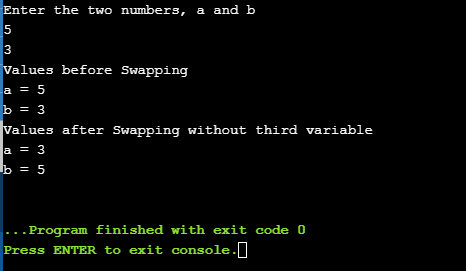
    Output:


  • Java Program to Check Whether the Given Number Is Binary or Not

    In this post, we will write a program on how to check whether given number is binary or not in java. Let start by knowing the Binary number and then see the example with an explanation.

    What is a Binary Number?

    binary number is a number expressed in the base-2 numeral system that is the number that contains 2 symbols to represent all the numbers. The symbols are 0 and 1.

    For example: 101011, 110011110, 10001111 are binary numbers.


    Let’s see an explanation to find out whether the given number is binary or not in java:

    There are many ways we can find the binary number in java, In this one, we will create a separate function and pass the number that needed to be check and print the result.

    First, take the user input with the Scanner class and pass that number to the numBinaryOrNot() function as an argument. Then declare a boolean variable (isBinary). After that execute while loop until the passed number is not equal to zero (copyNum != 0).

    Inside while loop, take the remainder and check if the remainder is greater than 1 or not. If it is greater then change the boolean value to false and break else divide the number by 10. The loop continues till all the numbers are checked.

    At last, check if the boolean value is still true then the number is binary number print the result else it is not a binary number.


    Java Program to Check Whether the Given Number Is Binary or Not

    import java.util.Scanner;
    
    public class CheckForBinary
    {
       static void numBinaryOrNot(int num)
       {
        boolean isBinary = true;
    
        int copyNum = num;
    
        while (copyNum != 0)
        {
          int temp = copyNum%10;  
    
          if(temp > 1)
           {
             isBinary = false;
             break;
           }
            else
           {
             copyNum = copyNum/10;    
           }
        }
    
         if (isBinary)
         {
            System.out.println(num+" is a binary number");
         }
         else
         {
            System.out.println(num+" is not a binary number");
         }
       }
     
      public static void main(String[] args)
      {
        Scanner sc=new Scanner(System.in);
        
        System.out.println("Enter a number");
        int num = sc.nextInt();
    
        numBinaryOrNot(num);
      }
    }

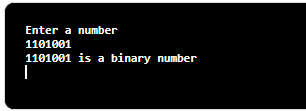
    The output to check for the binary number in java:

    Binary Number